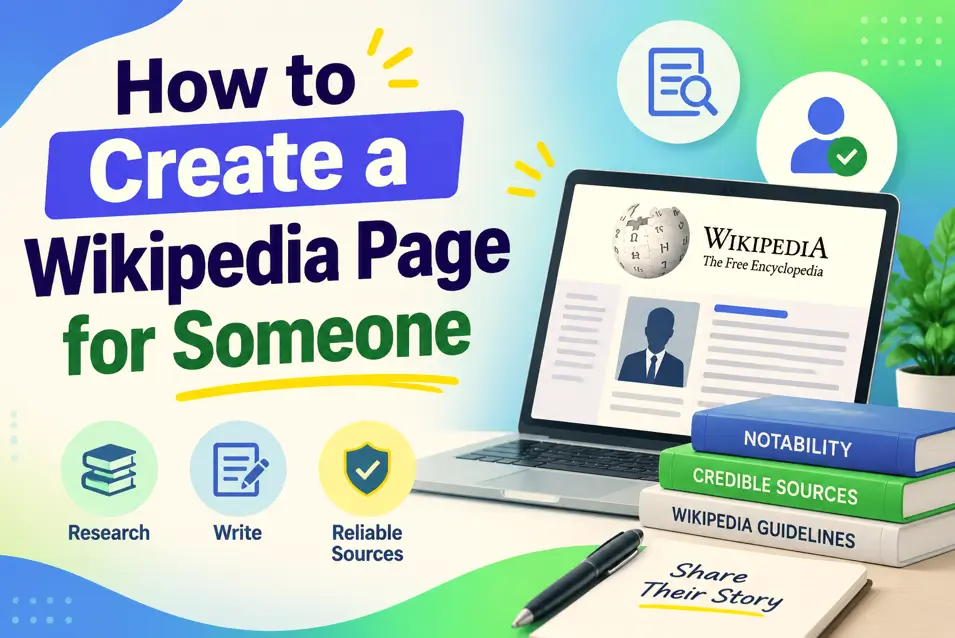
Learning how to create a Wikipedia page for someone else, such as a client, family member, boss, public figure, or author you represent, requires a different approach than creating one for yourself. You avoid personal bias about your own achievements, but you still need to prove that the subject meets Wikipedia’s notability requirements, support every claim with independent sources, and follow disclosure rules when you receive payment for writing about someone else.
This guide explains how to create a Wikipedia page for someone, what Wikipedia expects from third-party contributors, and why hiring an experienced editor can help avoid the rejection cycle that affects many first-time attempts.
Why People Look into How to Create a Wikipedia Page for Someone
People research how to create a Wikipedia page for another person for many different reasons:
- A publicist or manager wants to establish a client’s online credibility.
- A company wants to document a founder’s or executive’s career.
- A family member wants to preserve a relative’s professional legacy.
- An agency has received a request to build a public figure’s digital presence.
- A fan or admirer wants to document someone’s work, achievements, or history.
Regardless of the reason, every attempt must follow the same Wikipedia policies. Understanding these requirements early can save significant time and effort.
Step-by-Step: How to Create a Wikipedia Page for Someone
Step 1: Confirm the Subject Meets Wikipedia’s Notability Standard
Before starting, confirm that the person has received significant coverage from independent and reliable sources. These sources may include newspapers, magazines, trade publications, or broadcast media that discuss the person without payment or direct promotion. Wikipedia’s own notability guideline explains that primary sources, self-published materials, and interviews from the subject do not independently establish notability.
If the person has not received this type of coverage, creating a Wikipedia page will likely fail, regardless of their accomplishments.
Step 2: Disclose Any Paid or Compensated Relationship
If you receive payment, work for the subject, or have another compensated relationship, Wikipedia requires you to disclose this connection publicly under its paid-contribution disclosure policy. This rule applies to agencies, freelancers, publicists, and employees. Failure to disclose the relationship can lead to article deletion or account restrictions.
Step 3: Collect and Organize Independent Sources
Gather reliable, independent sources that discuss the person’s career, background, and achievements. Arrange these sources chronologically to show how the person’s recognition developed over time rather than focusing only on recent events.
Step 4: Write in a Neutral, Third-Person, Encyclopedic Tone
Writing about someone else makes it easier to maintain neutrality, but many third-party drafts still become promotional. Publicists and people close to the subject often unintentionally use marketing language. Every factual statement requires a citation, and promotional wording should be removed.
Step 5: Structure the Article the Way Wikipedia Expects
Most biographical Wikipedia pages follow a standard structure. They usually begin with an introduction that summarizes the person’s identity and importance, followed by sections covering early life, career, notable work, achievements, and personal life when relevant. Reviewing similar Wikipedia biographies can help you follow the expected format.
Step 6: Submit Through Articles for Creation
New or declared paid accounts usually cannot publish articles directly. Instead, creators submit drafts through Wikipedia’s Articles for Creation review process. Volunteer editors review the draft for notability, sourcing, and neutrality before approval. The process may take several weeks or months.
Step 7: Respond to Feedback and Monitor the Page After Approval
When reviewers decline a draft, they usually provide specific reasons. Address the concerns, such as weak sources or promotional language, before resubmitting. After approval, monitor the article regularly because other users can edit Wikipedia pages and outdated or inaccurate information may appear over time.
Common Mistakes When Creating a Wikipedia Page for Someone Else
Many people make avoidable mistakes when they attempt to create a Wikipedia page for another person. Common issues include:
- Assuming personal achievements automatically establish notability without independent coverage.
- Failing to disclose a paid or professional relationship with the subject.
- Relying too heavily on interviews and direct statements instead of independent reporting.
- Copying content from press releases or company biographies.
- Submitting one draft and abandoning the process after the first rejection.
- Ignoring Wikipedia formatting standards and editorial expectations.
Avoiding these mistakes improves the chances that the article will meet Wikipedia’s quality standards.
What It Actually Costs to Have a Wikipedia Page Created Professionally
Creating a Wikipedia page requires more than writing content. The process involves evaluating notability, finding reliable sources, following disclosure requirements, preparing a neutral draft, and responding to reviewer feedback. Because these steps require experience with Wikipedia policies, many people choose professional assistance instead of learning the entire process independently.
We provide transparent pricing options for Wikipedia-related services:
- Wikipedia page editing: $600
- New English Wikipedia page creation: $1200
These packages include notability evaluation, source research, professional drafting, Wikipedia-style formatting, and submission through the appropriate review process. They help clients avoid the challenges of learning how to create a Wikipedia page for someone from the beginning.
You can view the complete service options on the pricing page, or learn more about the process through hiring a professional Wikipedia page creator.
Frequently Asked Questions
1. Can anyone create a Wikipedia page for someone else?
Yes. Anyone can create a Wikipedia draft for another person if the subject meets Wikipedia’s notability requirements. The creator must also follow sourcing rules, maintain a neutral tone, and disclose any paid relationship.
2. Do I need the subject’s permission to create their Wikipedia page?
No. Wikipedia does not require permission from the subject before creating an article. However, informing the person can be a good professional practice, especially when managing their page on their behalf.
3. How much does it cost to have a Wikipedia page created for someone?
Professional Wikipedia page creation usually starts at around $1200 for a new English Wikipedia article. Editing an existing page often starts at $600, depending on the article’s condition, available sources, and required revisions.
4. What information do I need to create a Wikipedia page for someone?
You need reliable independent sources that discuss the person’s background, career, and achievements. You also need accurate biographical details to organize the article and support factual claims.
5. Why do Wikipedia pages created by publicists or agencies get rejected?
Wikipedia reviewers often reject these pages because they contain promotional language, lack sufficient independent sources, or fail to disclose paid relationships. Reviewers carefully examine these issues before approving articles.
6. Can I create a Wikipedia page for a deceased family member?
Yes, you can create a Wikipedia page for a deceased family member if they meet Wikipedia’s notability standards. The person’s life, work, or achievements must receive enough coverage from independent reliable sources.
7. How long does it take to create a Wikipedia page for someone?
The timeline for creating a Wikipedia page can range from 10 days to 3 months, depending on the subject’s notability, the availability of reliable sources, the method used, and the Wikipedia review process.
8. Is it better to hire a professional than attempt it myself?
The choice depends on your familiarity with Wikipedia policies and editing requirements. Professional editors often have more experience with sourcing, formatting, and reviewer expectations, which can improve the approval process.
9. How do I get started creating a Wikipedia page for someone?
You can contact our team to discuss the subject’s eligibility, available sources, and the steps required to create a Wikipedia page that follows Wikipedia’s guidelines.